Go-Digital — Digital Insurance Card Platform
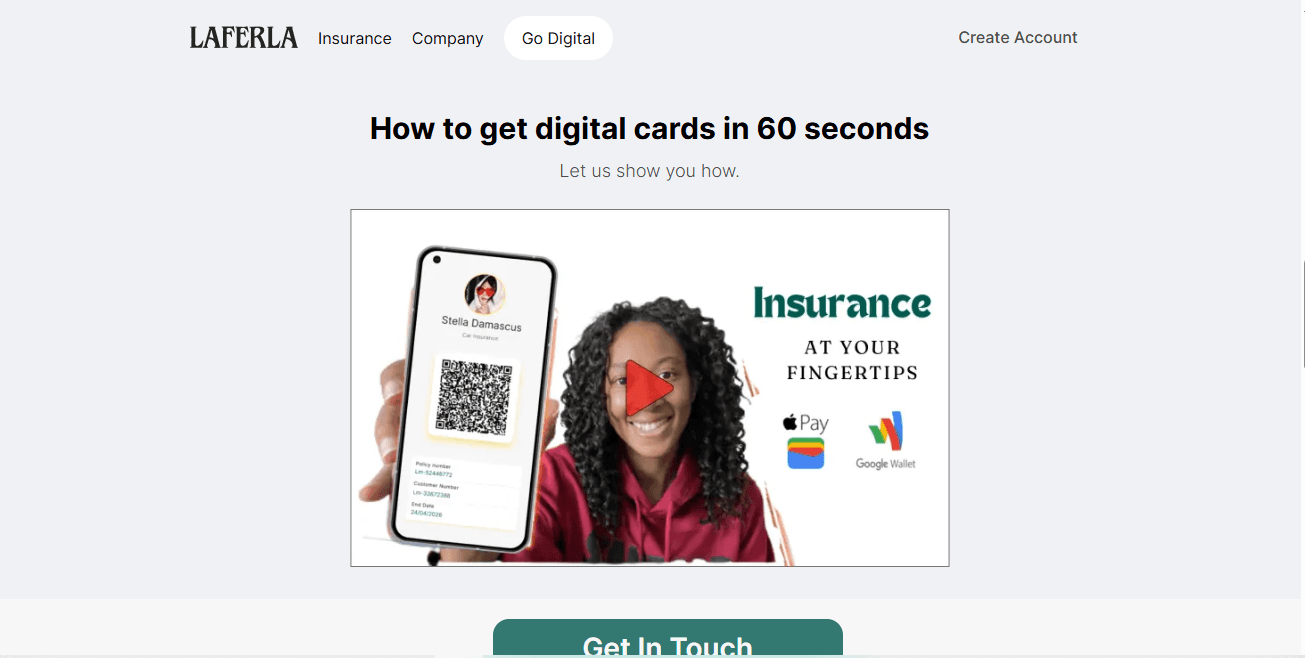
Laferla, an insurance provider, needed to move member cards from physical plastic to digital. I built the platform that made the switch — with native Google Wallet and Apple Wallet integration, so a card lives in your phone's wallet — driving a 25% jump in adoption, and redesigned the auth flow and dashboards for 20% growth in new sign-ups.
The problem
Laferla, an insurance provider, issued member cards as physical plastic. Plastic has two problems. It gets misplaced — and a lost card is a hassle to replace. And it's expensive to produce — printing and shipping cards to every member adds up fast.
But an insurance card is really just proof that you're covered. It didn't need to be plastic. Move it to the phone and it's always with you, impossible to leave at home, and there's nothing to print. That's the whole idea behind Go-Digital: your card lives in the one thing you never leave the house without.
My role
I built the frontend and connected it to the backend APIs — the interface a member used to view their card and add it to their phone. The part I played the biggest role in, working closely with the backend developer, was the Apple Wallet integration: generating the passes, and once they were working end to end, wiring the flow up to the backend so a member's real card data produced a real card in their wallet.
Getting the card into Apple Wallet
Both Google Wallet and Apple Wallet let you hand a user a real card that lives in their phone — but Apple's side was by far the harder of the two, and it's where most of my effort went.
An Apple Wallet pass isn't a file you can just generate and hope works. Apple's rules are strict: a pass has to be built to an exact format, tied to a registered pass type, and cryptographically signed with a certificate issued by Apple before Wallet will accept it at all. There's very little room for "close enough" — a pass that's slightly off simply won't load. I generated the passes, got them validating against Apple's requirements, and then connected that flow to the backend API so the card a member saw was always their real, current one.
Why digital beats plastic
The payoff shows up in the numbers and in everyday use. The switch drove a 25% jump in adoption, and redesigning the auth flow and member dashboards grew new sign-ups by 20%.
But the everyday win is simpler: a member can't misplace a card that lives on their phone the way they lose a plastic one, they can pull up proof of coverage anywhere, and Laferla cut the recurring cost of printing and shipping physical cards. Better for the member, cheaper for the business.
What I took away
The lesson that stuck: with "add to wallet," the hard part isn't the UI — it's the platform's rules. The interface is the easy 20%; the real work is meeting Apple's signing and format requirements exactly, because they don't bend for you.