Case study 012025
Social Shake — UGC Marketplace
Built end to end as a freelancer for an Australian client. Brands write a brief in a four-step wizard, invite or open it to creators, and pay only for approved videos; creators apply, deliver and get paid out; admins approve both sides. Brands, creators and admins each get their own dashboard.
TL;DR
- Problem
- Brands and creators had to trust each other first: one pays up front, or the other films for free.
- Built
- A three-sided marketplace: a four-step brief, card holds charged only on approval, and Stripe Connect payouts.
- Result
- Live for an Australian client, with 500+ creators on the platform.
The problem
Brands want short-form video from real creators. Creators want briefs they can actually deliver on, and to get paid for them. Usually that happens across DMs, spreadsheets and invoices, and someone always has to go first: the brand pays and hopes the video arrives, or the creator films and hopes the money does.
An Australian client hired me to replace all of that with one product. I built Social Shake on my own, from first commit to production, over about six months: a marketplace where brands brief, hire and pay creators, and an admin team keeps both sides honest.
What made it hard
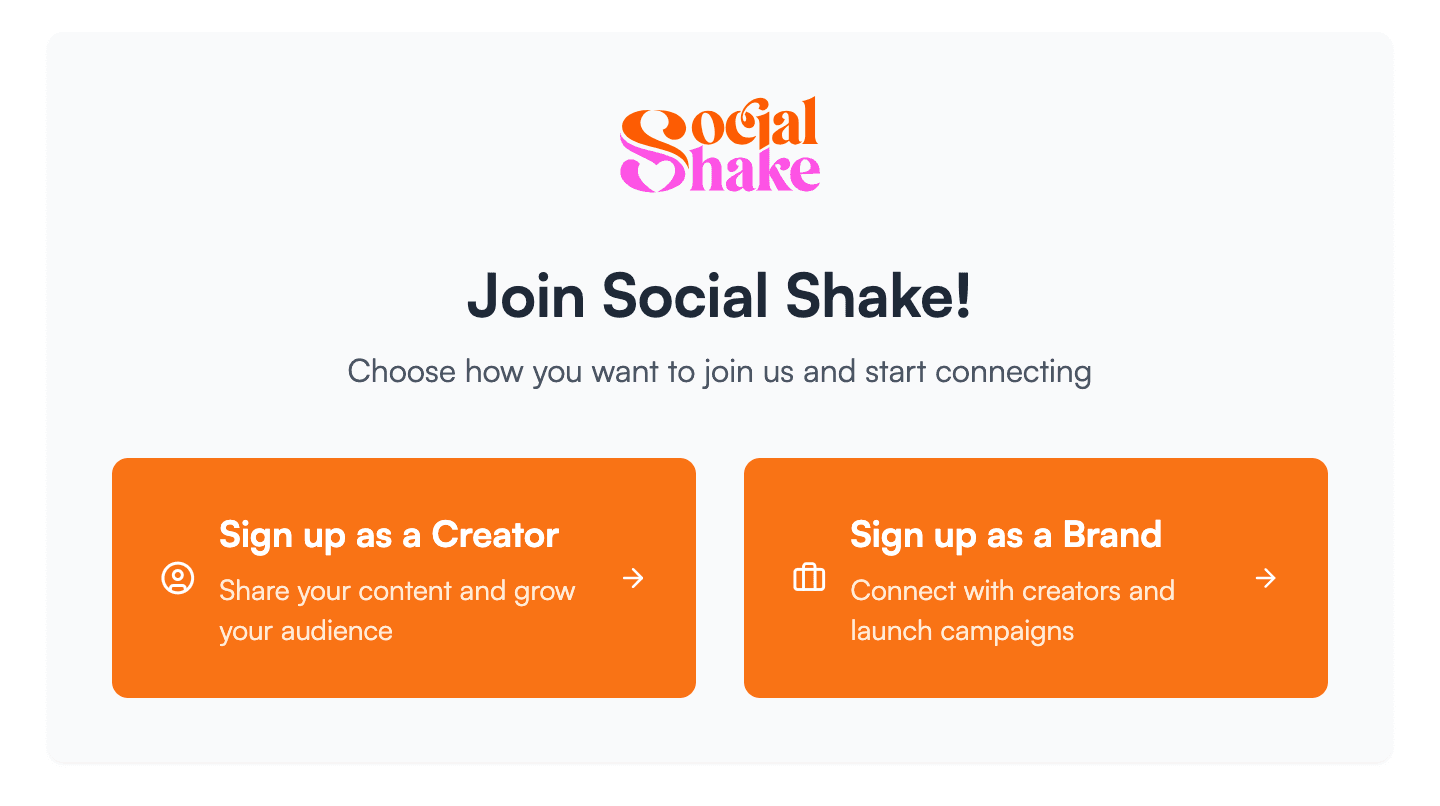
It isn't one app, it's three, sharing one set of data:
- Brands write briefs, invite creators or open the brief to everyone, approve or send back videos, and pay.
- Creators verify their identity, connect TikTok, apply, deliver, revise, and get paid out.
- Admins approve brands, creators, projects and contests before anything goes live.
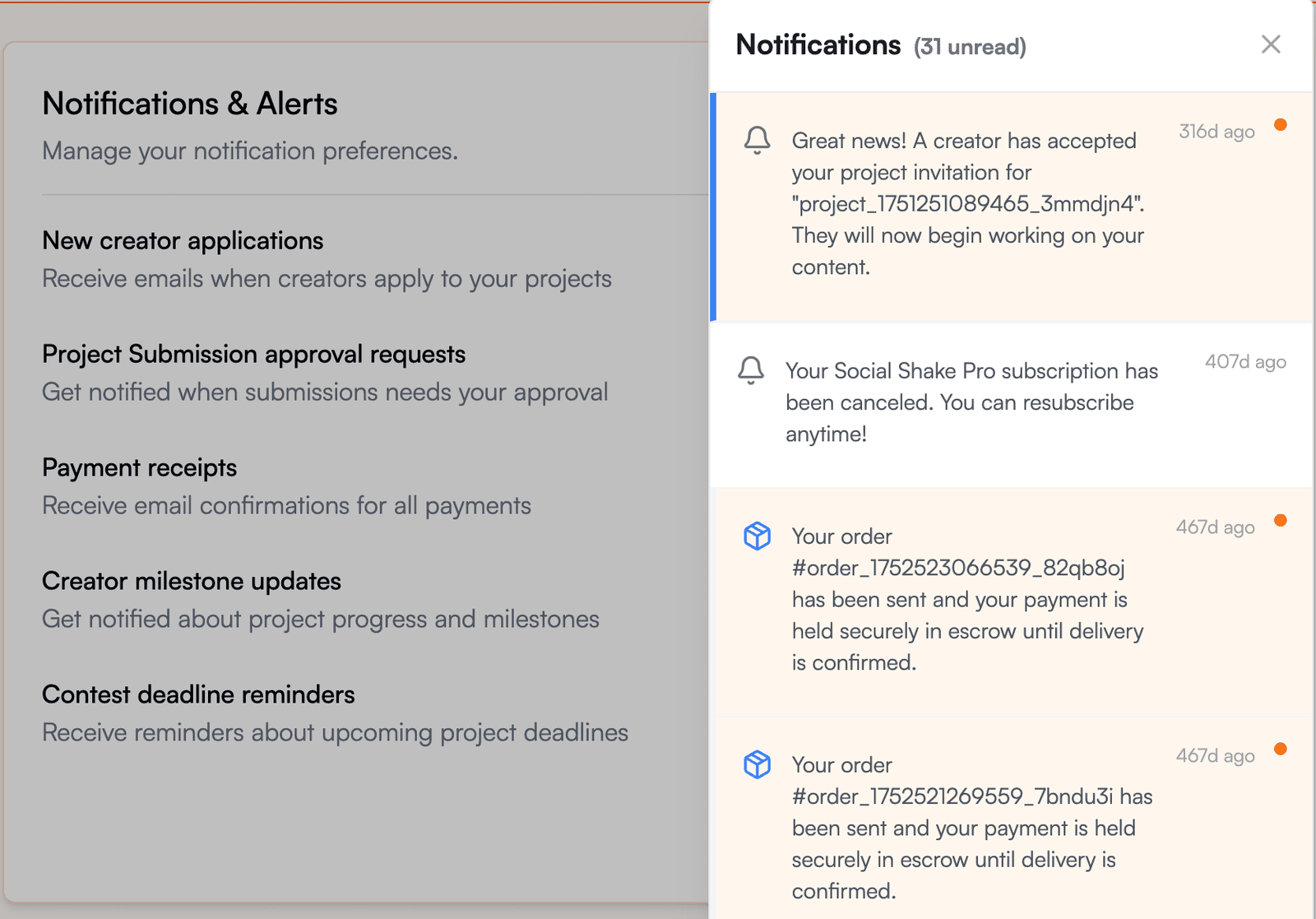
Every brief turns into orders that move through a lifecycle (pending, in progress, delivered, revision requested, approved, completed), and money has to move in step with it. On top of that, creators upload videos of up to 100MB, and both sides expect to see updates the moment they happen.
How I built it
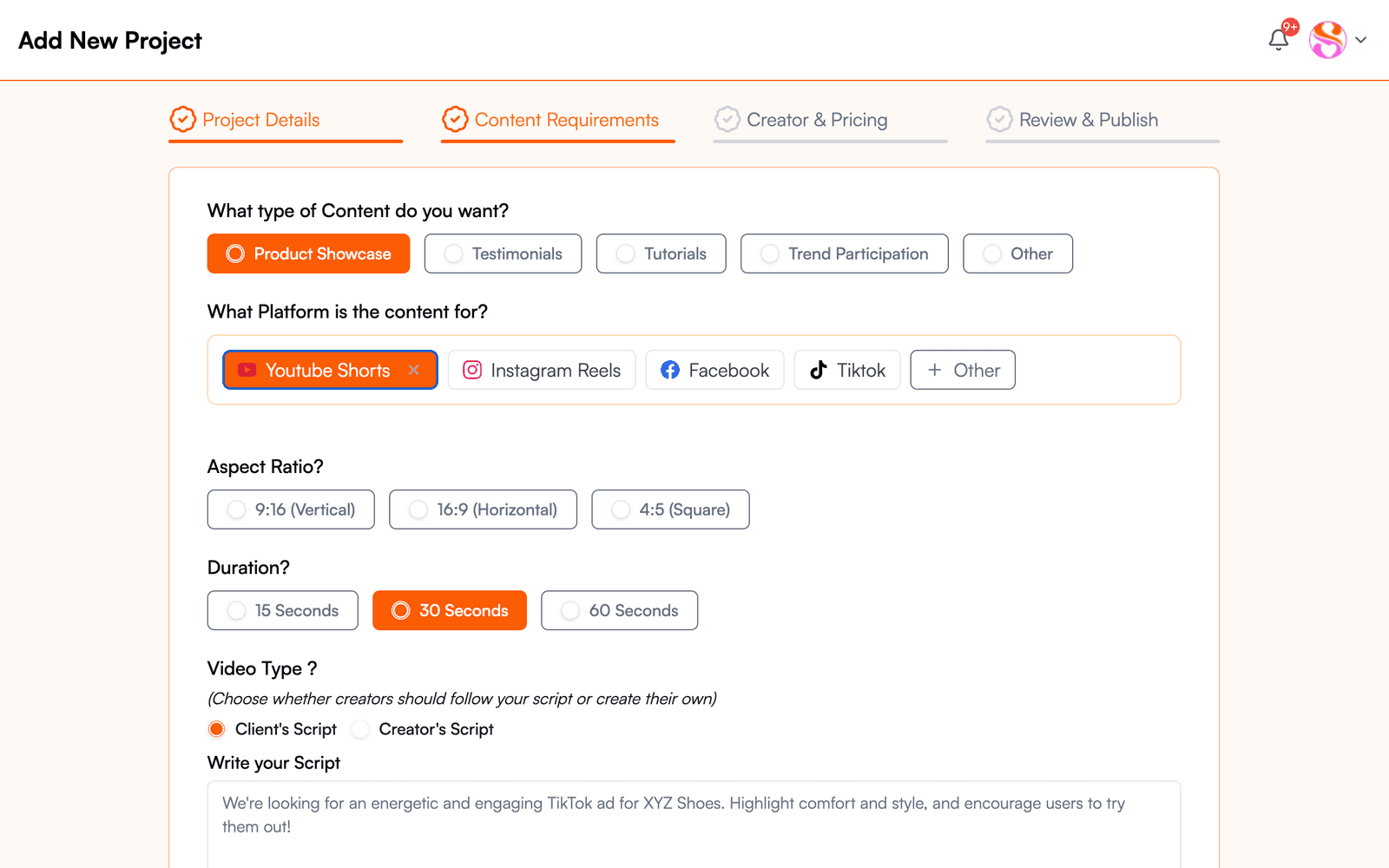
A brief in four steps. Writing a good brief is the hardest part for a brand, so I split it into Project Details, Content Requirements, Creator & Pricing, and Review & Publish. Each step asks only what it needs. The first is just a name, a project type (raw UGC, creator-posted, or Spark Ads) and what's being promoted. The second covers content type, platforms, aspect ratio, duration, and whose script to follow.
The Creator & Pricing step shows a live estimate (creators × videos per creator) next to the picker, so the brand sees the cost before they commit, along with the line that matters most: you only pay for approved videos.
Escrow, then payouts. At checkout the brand's card is authorised but not charged: the Stripe payment is created with manual capture and the order sits at pending_capture. When the brand approves the video, the payment is captured and the creator's share goes to their own Stripe Connect account. If the brand rejects it, the payment is cancelled and the hold on their card disappears. If they want changes instead, the order goes to revision_requested and the creator resubmits, with every round kept in the submission's history.
Big videos through small pipes. The app runs on Vercel, where a single request can't carry a 100MB video. So uploads go up in 1MB chunks and are reassembled in Firebase Storage.
Live updates. Next.js runs inside a custom Node server so Socket.io can share its port. Each conversation, brand and creator gets a room, so messages, delivery updates and verification decisions appear on the other side without a refresh.
The decision
The big call was authorise now, charge on approval, instead of charging the brand up front. Charging at checkout is simpler, but then a rejected video means chasing a refund, and nothing protects the brand if the video never arrives. The whole pitch of the product is that neither side has to trust the other first.
With a card authorisation, the creator can see the money is really there before they start filming, and the brand isn't charged until they've seen the result. Rejection becomes a cancelled hold, not a refund. The cost is complexity: every order needs explicit payment states, approval has to be the only thing that captures money, and Stripe webhooks have to be safe to receive twice, so each event is recorded and skipped if it's already been processed. In exchange, "you only pay for approved videos" is something the product enforces, not just a sentence on the pricing page.
Impact
Social Shake is live, with 500+ creators on the platform and brands running projects and contests through it.
What I'd do differently
Card authorisations don't last forever. Stripe holds them for about a week, and nothing in the flow accounts for a creator who takes longer than that, or for a revision round that pushes approval past the deadline. Given another pass, I'd charge up front for longer projects, hold the funds in the platform's balance, and transfer them on approval. That keeps the same promise without the clock.
Money also moves from more places than it should. Transfers to creators are created in four different routes (order release, contest payouts, creator withdrawals and a payouts job), and none of them pass Stripe an idempotency key. I'd put every transfer behind one payments service with idempotency keys, so a retried request could never pay a creator twice.